I know a lot of fairy tales.
Like I cut my teeth on them. I grew up reading lots of fairy tale collections, and I realized I could only with difficulty think of fairytales where women were friends, where women talk to each other, and where they weren’t antagonists to each other in some way. I know they’re there, but the fact that I could reach for 10 stories of women waiting for rescue or women waiting to be chosen or women seeking husbands or, you know, that sort of thing instead of a story of women setting out together to have adventures—which is really what I wanted to tell my 7 year old niece who is asking me for a fairy tale— It was very disturbing to me, and I just remember in that moment thinking I’m just going to make something up. I’m gonna make something up because I really want her to know that there is room in fairytales for girls to be friends.
I know a lot of fairy tales.
Like I cut my teeth on them. I grew up reading lots of fairy tale collections, and I realized I could only with difficulty think of fairytales where women were friends, where women talk to each other, and where they weren’t antagonists to each other in some way. I know they’re there, but the fact that I could reach for 10 stories of women waiting for rescue or women waiting to be chosen or women seeking husbands or, you know, that sort of thing instead of a story of women setting out together to have adventures—which is really what I wanted to tell my 7 year old niece who is asking me for a fairy tale— It was very disturbing to me, and I just remember in that moment thinking I’m just going to make something up. I’m gonna make something up because I really want her to know that there is room in fairytales for girls to be friends.
― Amal El-Mohtar, Interview, Storylogical
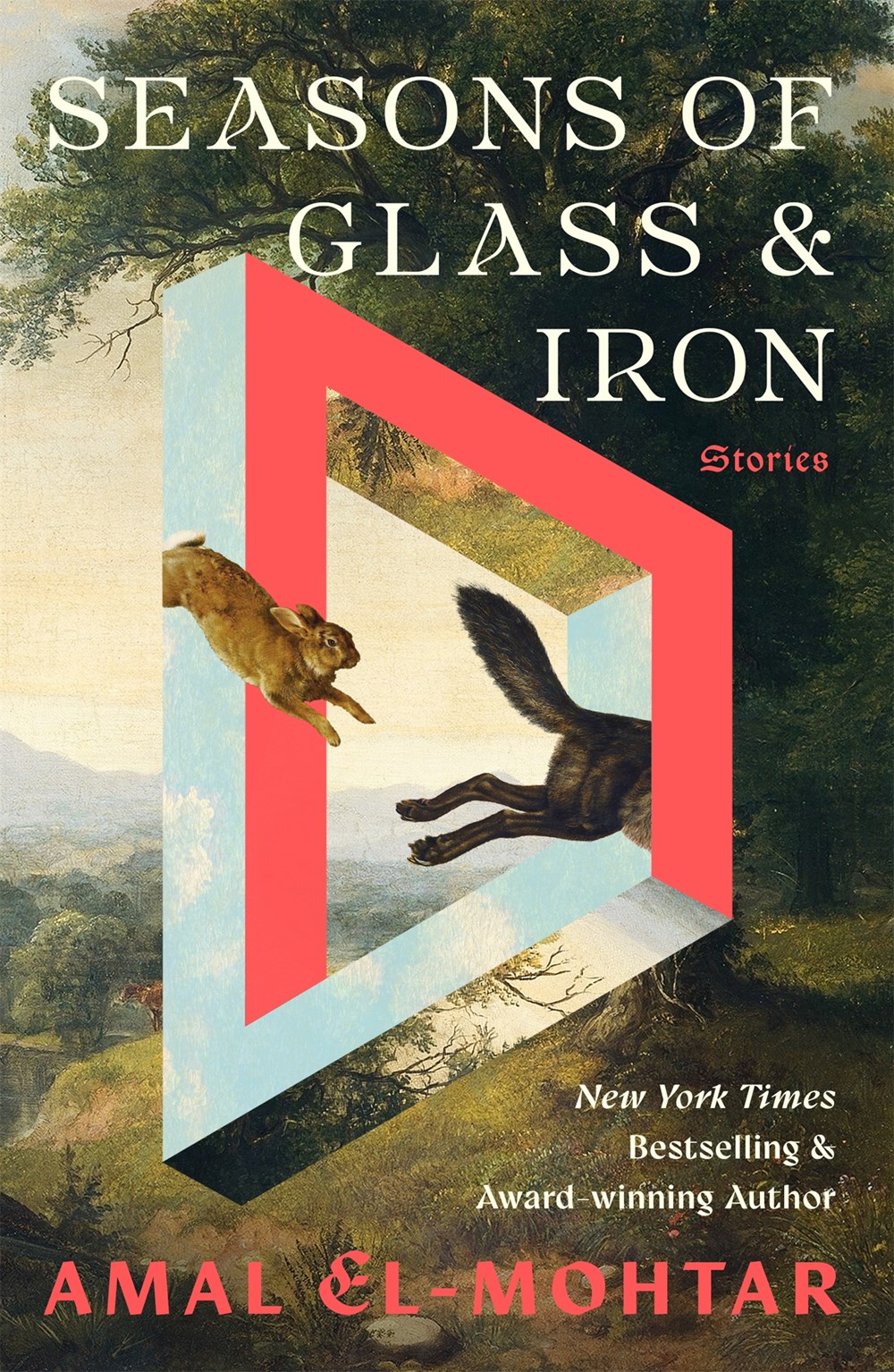
What booksellers are saying about Seasons of Glass & Iron
- Amal El-Mohtar could transform a grocery list into the most beautiful lyrical poetry you can imagine. Eleven stories created over a 15-year span, all centered on one theme: women and their stories, proof of what Emily Yoshida once said about the terrifying magic of two women in a room, talking. Beautiful, lyrical, and haunting. Another powerful collection from one of the best authors of my generation.
― Erika, Righton Books, St. Simon’s Island, Georgia | BUY
- El-Mohtar weaves themes of grief, desire, girlhood, and war into this short story collection, a combination of new and republished works. She does it all: drifting through magical realism, folklore, verse, and fantasy, with stories that will break your heart and stitch it, delicately and lovingly, back together. “The Truth About Owls” was my personal favorite!
― Flora, Epilogue Books, Chapel Hill, North Carolina | BUY
- Amal El-Mohtar is a true literary magician! With intelligent, musical prose, she manifested wonders that I’ve never dared to imagine: hills blown from bright glass, seas glittering with liquid diamond, emerald hummingbirds erupting in flame. Each classical fable was anchored in heartfelt humanity; every contemporary narrative imbued ordinary struggles with extraordinary magic. All of these stories left me spellbound, wishing for more.
― Alexandria, Oxford Exchange in Tampa, Florida | BUY
- Amal El-Mohtar is a short story wizard and this collection proves it. Seasons of Glass and Iron holds the sort of magic every reader hungers for. These stories pack punch after punch, and I will return to them again and again, to renew the magic.
― Rachel, Parnassus
Books in Nashville, Tennessee | BUY
About Amal El-Mohtar
Amal El-Mohtar is a Hugo Award-winning author of science fiction, fantasy, poetry and criticism, and the co-author of the New York Times bestseller This is How You Lose the Time War, written with Max Gladstone, which has been translated into over ten languages. Her reviews and articles have appeared in the New York Times and on NPR Books. She lives in Ottawa, Canada.






 “I thought about setting the historical timeline before the Meiji Restoration, when the samurai still would have had social standing and power. But ultimately, I liked the idea of Sen’s family desperately clinging to the past glory of the samurai, because desperate characters do irrational things. I also liked that because Sen’s father essentially wants to start a whole new samurai rebellion from scratch. The stakes feel much more like a personal vendetta than a political movement. I think this decision fit better with the story I was trying to tell — I’m more interested in talking about the mistakes of one family who happened to be samurai rather than commenting on the samurai at large.”