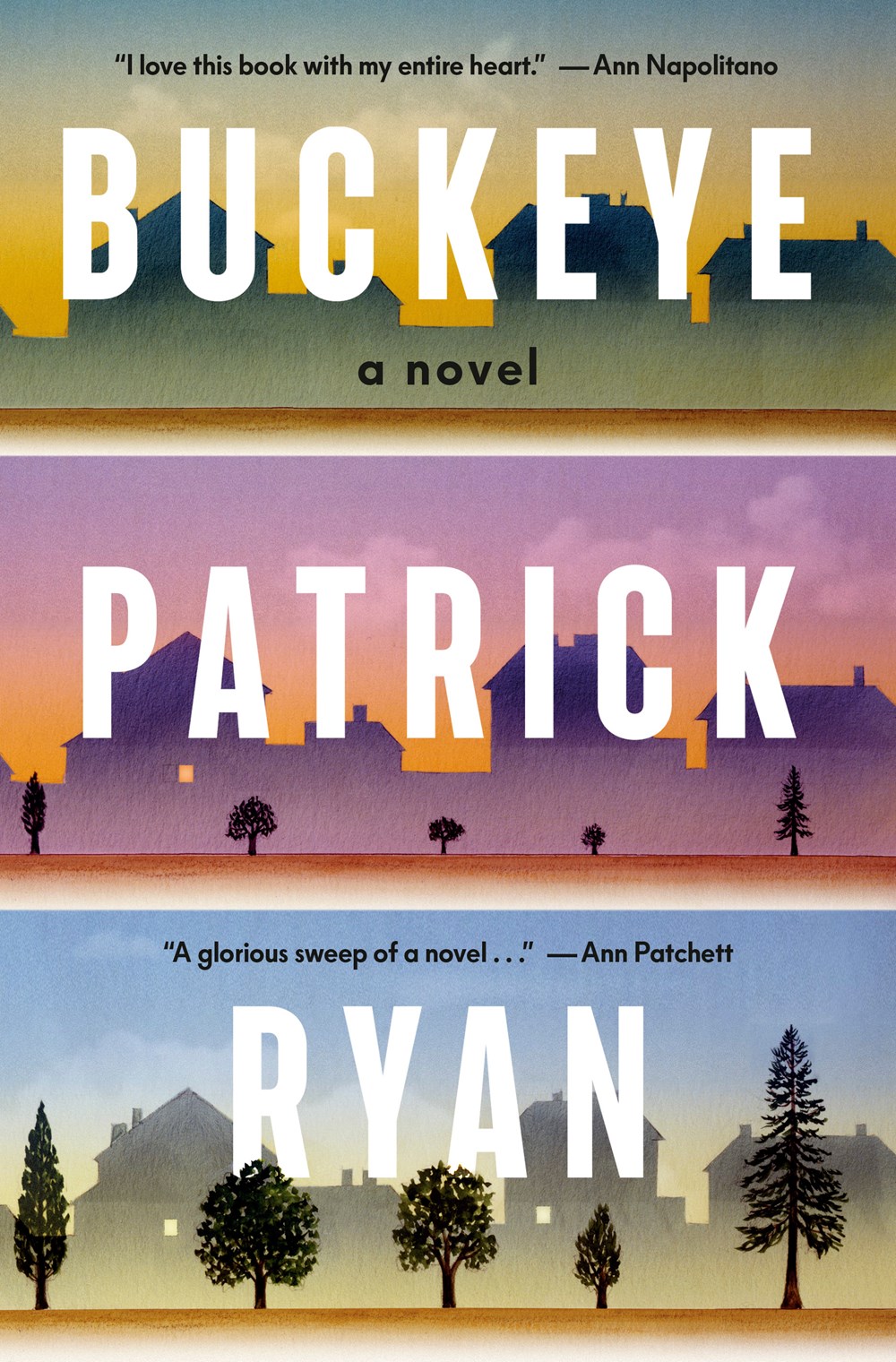
Book Buzz: Buckeye by Patrick Ryan

 I’ve always been a writer who puts character first, and when I embarked on writing this novel, I was prepared for some deep character dives. But Buckeye is larger in scope and size than anything I’d ever attempted, and I had no idea of the depths that awaited me… What I learned–what I keep learning, as a writer–is that when you bring a lot of characters together, a story emerges, and it’s not always the story you thought you were going to write.
Buckeye explores the repercussions of deceit and betrayal, and the winding, sometimes impossible paths we have to travel on our way to making amends. Forgiveness, the novel suggests, isn’t just one decision; it’s a million decisions, made over and over.
― Patrick Ryan, Letter to booksellers
What booksellers are saying about Buckeye
- I read this book over the course of a week, and each time I picked it up I was so eager to spend more time with the characters. The writing is gorgeous, but in the most understated way. This book has a lot of beautiful things to say about what it means to build a life with someone—a friend, a spouse, a parent, a neighbor, a coworker—and how a series of moments, accumulated over decades, inevitably become a life.
― Amanda Grell, Pearl’s Books in Fayetteville, Arkansas | BUY
- Oh my heart! This sweeping family epic was everything I hoped it would be…an engrossing, heartbreaking story of two couples finding their way through decades of love, loss, tragedy and forgiveness. Each character is beautifully drawn and authentically flawed in their struggles with who they are , and who they are expected to be. Buckeye is the kind of captivating novel you can’t stop thinking about, days after turning the last page.
― Anderson McKean, Page & Palette in Fairhope, Alabama | BUY
- Patrick Ryan traces the story of two families in small town Bonhomie, Ohio from the 1930’s through the bicentennial celebration and how their lives intersect. This is a masterfully told story of how we may allow our past to define who we think we are, but, ultimately the past is not the most important element of our lives- it is actually love and forgiveness that should define us. This was a very moving and thought provoking novel and one of the lines that will stick with the reader is “water, water everywhere. Water under the bridge. So much …… water.”
― Jim Clemmons, Sundog Books in Santa Rosa Beach, Florida | BUY
- Buckeye is a family saga – a glorious one at that – but it’s also a novel about what happens when something is kept hidden for too long. Set in the small Ohio town of Bonhomie in the middle of the twentieth century, Buckeye follows two families, the Jenkins and the Salts, who are forever bound by a secret – one that will ultimately blow their worlds apart. Full of subtle wit and wry observations, this is an epic novel about many things: honesty, the futility of war, family, love, forgiveness, and – ultimately – being true to yourself.
― Jude Burke-Lewis, Square Books in Oxford, Mississippi | BUY
- Buckeye is an all encompassing historical novel about two interwoven families in a small Midwest town from World War two until the early 80s. It’s full of familial turmoil and love and is incredibly addictive! Margaret Salt is a military wife whose husband is serving on a transport boat. When he goes missing, she has a very short affair with Cal Jenkins. Cal is burdened by his inability to serve and is skeptical of his wife’s ability to contact the dead. This secret will have consequences that will carry on for years.
― Jennifer Jones, Bookmiser, Inc. in Marietta, Georgia | BUY
About Patrick Ryan
Patrick Ryan is the author of the novel Buckeye. He is also the author of the story collections The Dream Life of Astronauts (named one of the Best Books of the Year by the St. Louis Times-Dispatch, LitHub, Refinery 29, and Electric Literature, and longlisted for The Story Prize) and Send Me. His work has appeared in The Best American Short Stories, the anthology Tales of Two Cities, and elsewhere. The former associate editor of Granta, he is the editor of the literary magazine One Story and lives in New York City.

Book Buzz: Buckeye by Patrick Ryan Read More »

 When it comes to emotionality in the book, I wanted to portray how — this goes along with the ambiguity — multiple contradictory feelings can exist simultaneously within one person, and how our feelings may change over the day, over an hour, and over a year and a lifetime. Even the simplest things can be the hardest to say. For example, Bo really wants to tell Hans how proud he is. He tries to say it throughout the whole book. It was super frustrating to write. “Come on, Bo! You can do it!” It’s a simple and good emotion, right? You think that it should be easy, but a lifetime of normative training combined with the recurring conflicting aspects of the relationship get in the way. And in this sense, I was very inspired by my own father and grandfather. My grandfather told me how proud he was of my father and how well he’d done in life and so on, but he couldn’t tell my father that. But of course I did, and it made my dad happy. But there’s something that makes certain feelings really hard to express.


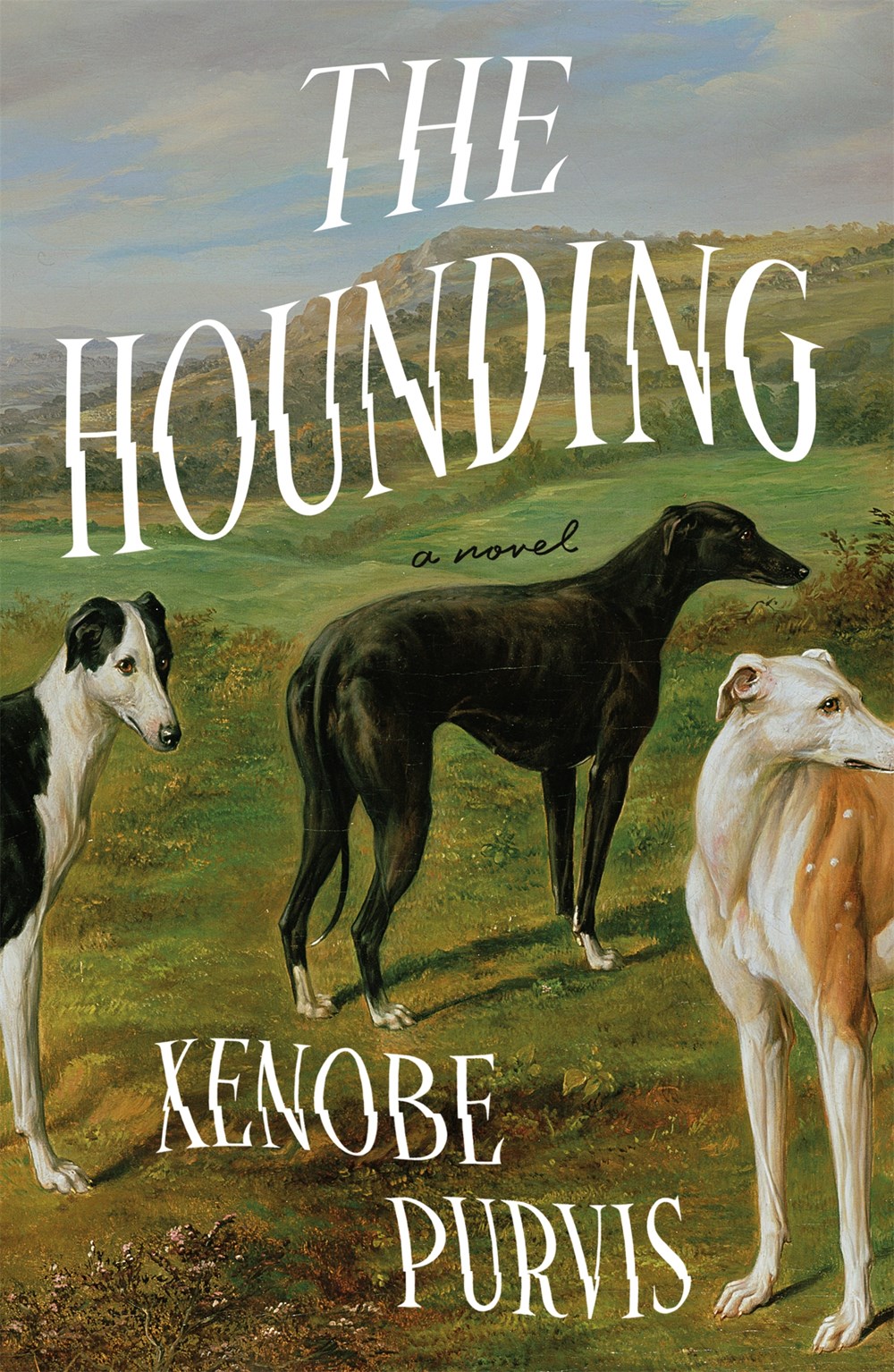
 There are many examples of this kind of thing throughout history. I was actually inspired by a specific historical event; I came across the true story of a village in Oxfordshire in the 1700s in which a great rumor was said to be spreading that five sisters had been “seized with frequent barking in the manner of dogs.” I was obviously fascinated to imagine how the girls’ community would have responded to their case, and how this rumor spreading might easily have become dangerous and even violent…I agree [that the] incredibly sinister aspect of Shirley Jackson’s work, the vilification of the mundane…is definitely terrain that The Hounding shares with Jackson’s stories. Like her, I’m very interested in thinking about the everyday awfulness of people, but I also wanted to try to understand even my most detestable characters. I really wanted to find a degree of sympathy for all of them in order to inhabit their thoughts and feelings.


 The premise, of a family in Japan, draws on my experience directly, because I spent time in Japan with my family when I was a child. But what prompted the novel are less specific memories themselves than the hazy, fragmentary quality of my memories from that time, the extent to which they’re partial and distorted. My memories from that time feel like dreams, and their atmosphere is sometimes quite ominous. Eventually a storyline that departs pretty dramatically from any event of my life came along to suit that weird, ominous tone.