 “I’ve always really been fascinated in maps and the idea of mapping and the impulse to map. I think it is a real human instinct to do it. It actually – as humans, it predates our ability to write. You know, the first known map in the world is an Iron Age map on the walls of a cave in what’s now the Italian Alps in a place called Bedolina. And somebody at some point was filled with the urge to draw, to scratch into the rock this exquisite rendering of their home – their fields and huts and their sort of town, I suppose you would call it. And it’s just such an interesting representation of the urge to say, this is who I am. This is where I am. But of course, you fast-forward a – say, a thousand years or so and you get to the Roman Empire. And from that point on, it’s impossible to disentangle the urge to map from the urge to possess, the – from colonialism.”
― Maggie O’Farrell, NPR Fresh Air
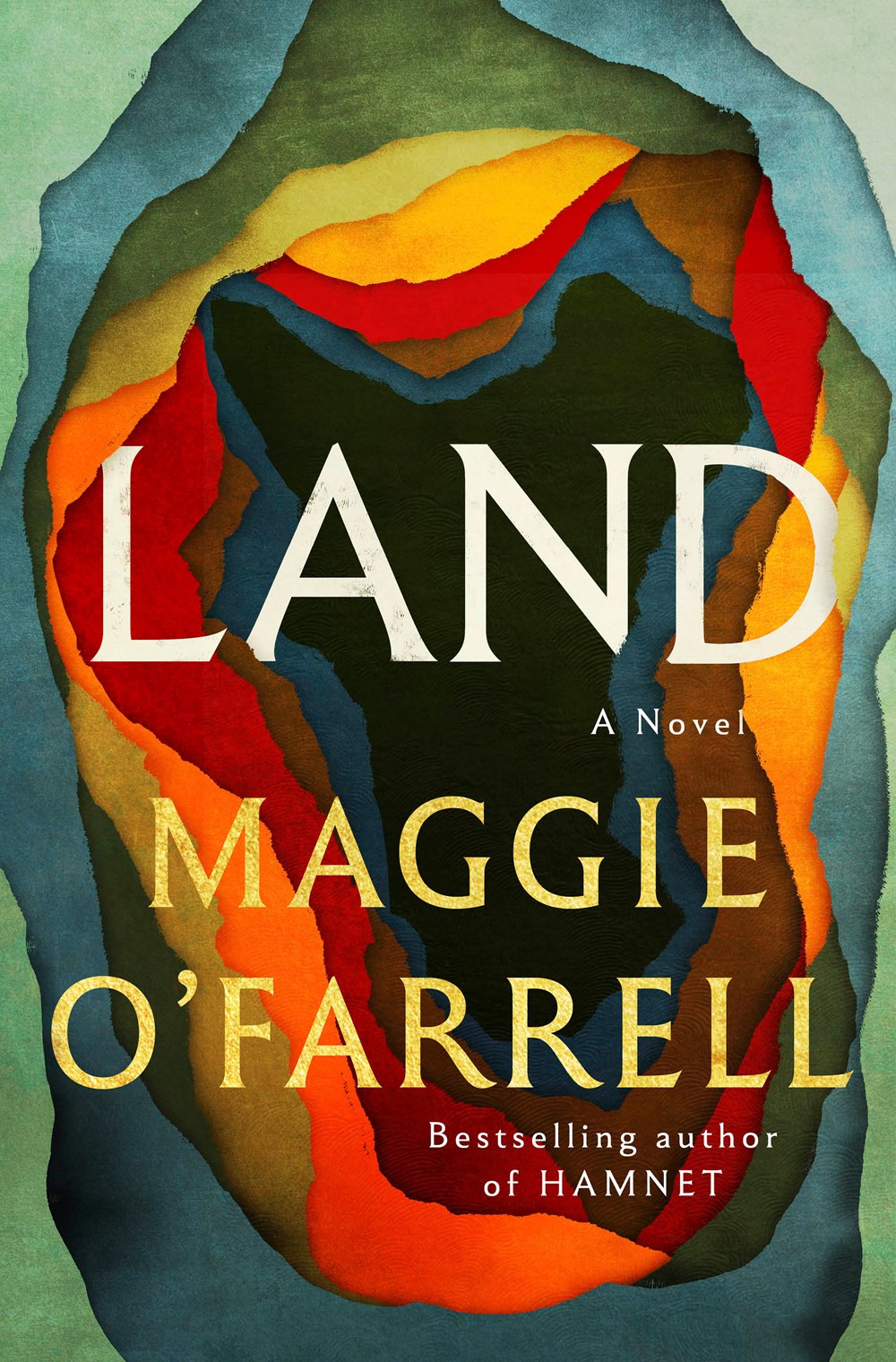
What booksellers are saying about Land
- I’ll always go wherever Maggie O’Farrell leads me… Her lush prose and interweaving of facts and folklore brought this time and place to life for me, in the same way my grandmother’s stories once evoked Ireland of long ago. As always her prose, characters, and plot created a powerful story of family and survival. All that and a great dog, too.
― Liz, E. Shaver, Bookseller, Savannah, Georgia | BUY
- Immersive and atmospheric, this magnificent story takes us on a journey through time as the fate of one Irish family is woven through the history and geography of the land they call home.
― Anderson, Page & Palette, Fairhope, Alabama| BUY
- A book of strange, uncommon tenderness…O’Farrell transports us expertly to the steely reality of 19th century Ireland and America, with all the hardships, oppression and possibility of those times, infused with a hint of magic when the tale occasionally slips into the distant past.
― Doron, Octavia Books, New Orleans, Louisiana | BUY
- I loved this book like I love a sad song. It made my heart ache and race and break in only the ways that great art can…I will carry the stories of Tomas, Phina, Enda, Rose, Liam, Eugene and sweet brave Bran for a long time.
― Amanda, Tombolo Books, St. Petersburg, Florida | BUY
About Maggie O’Farrell
Maggie O’Farrell was born in Derry, Northern Ireland, in 1972. Her novels include Hamnet (winner of the National Book Critics Circle Award and the Women’s Prize for Fiction), The Marriage Portrait, After You’d Gone, The Vanishing Act of Esme Lennox, The Hand That First Held Mine (winner of the Costa Novel Award), and Instructions for a Heatwave. She has also written a memoir, I Am, I Am, I Am: Seventeen Brushes with Death. She lives in Edinburgh.